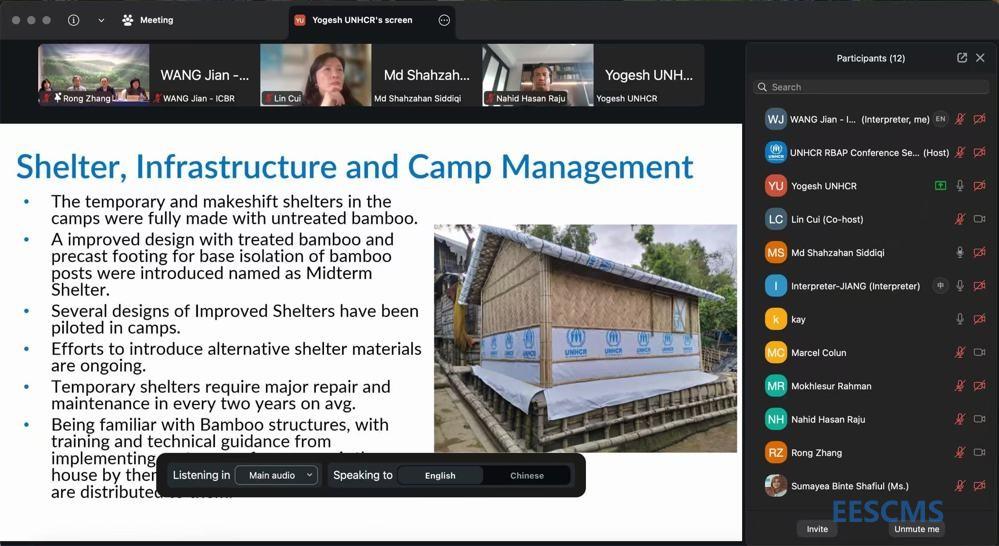
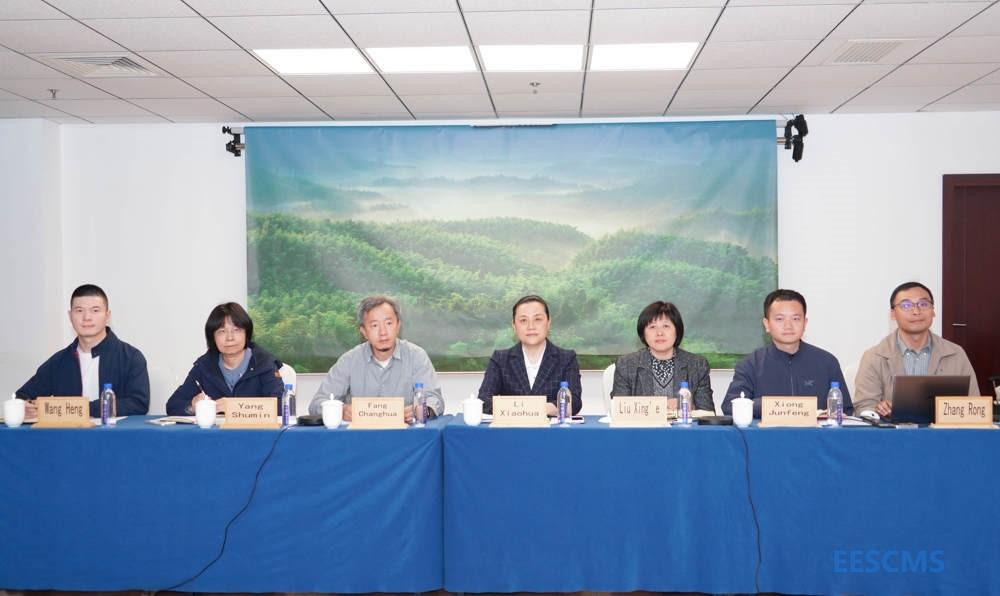
On April 16, 2026, ICBR co-hosted a specialized online exchange with UNHCR Representation in China and in Bangladesh. Parties to the meeting carried out in-depth discussions on the innovative application of bamboo resources in refugee shelter construction and local ecological environment protection in Cox’s Bazar, Bangladesh. Focusing on key technologies such as round bamboo construction, bamboo as a substitute for plastics, and bamboo charcoal-based functional materials, the meeting jointly explored pathways for cooperation on green humanitarian aid.
During the meeting, Mr. Yogesh Gyawali from UNHCR Bangladesh introduced the role and specific circumstances of bamboo in emergency settlement, shelter construction, and livelihood support in Bangladesh. UNHCR noted that bamboo is a common local building material with significant advantages—it is green, low-carbon, economical, practical, and can be sourced locally. It has already been widely used in local refugee settlement and humanitarian aid efforts.
Three experts from ICBR delivered special reports on core technical areas. The presentation on the application of round bamboo architecture focused on its structural safety and ease of construction as a green building solution for temporary settlements and public facilities. The briefing on the latest progress in the research and development of bamboo plastic substitutes showcased the important value of bamboo-based materials in substituting for single-use plastics and improving sanitation conditions in camp areas. The report on bamboo charcoal-based functional materials introduced preparation methods and performance advantages, hoping to provide efficient and feasible solutions for drinking water safety, camp ecological restoration, and sustainable land use in refugee settlements.
ICBR and UNHCR discussed the technical adaptability of bamboo material applications, implementation models, material supply, and standards and specifications. This exchange is an important step in ICBR’s initiative to serve international humanitarian aid and deepen green technology cooperation. It established a pragmatic cooperation platform for bamboo and rattan technologies to contribute to refugee settlement, ecological conservation, and livelihood improvement, and provided new channels for ICBR to expand international project cooperation.