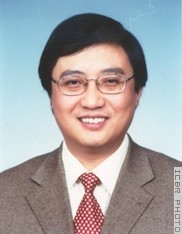
Fan Shaohui, professor and doctoral supervisor, works at the Research Institute of Bamboo and Rattan Resources and Environment of the International Centre for Bamboo and Rattan (ICBR).
He graduated from Fujian Forestry College with a major in Forestry in 1982, obtained a master's degree in Silviculture in 1985, and stayed at the university to teach the same year. From 1986 to 1987, he pursued advanced studies at the Nagasaki Prefectural General Agricultural and Forestry Experiment Station in Japan. From 1991 to 1994, he studied at Beijing Forestry University and earned a doctoral degree in Forest Silviculture.
He once served as the Director of the Science and Technology Department of the International Centre for Bamboo and Rattan (ICBR). Currently, he holds the positions of Chief Expert of the Institute of Bamboo and Rattan Resources and Environment, ICBR. Vice Chairman of the Forest Silviculture Branch and Bamboo Branch of the Chinese Society of Forestry; Standing Director of the Bamboo and Rattan Resources Utilization Branch of the Chinese Society of Forestry; Deputy Editor-in-Chief of Journal of Bamboo Research; and Member of the Editorial Board of Forest Research.
Research Fields & Achievements:
He has long been committed to the research of forest silviculture theories and technologies, focusing on artificial forest cultivation nutrition, long-term productivity maintenance mechanisms, as well as natural forest protection, restoration and cultivation technologies. He has made important breakthroughs in bamboo forest silviculture and ecology.
Projects Undertaken: He has successively undertaken more than 30 national-level projects, including the National Science and Technology Support Program, the 863 Program, the 948 Program, the Transformation of Agricultural Scientific and Technological Achievements Program, and the Promotion of Forestry Scientific and Technological Achievements Program.
Scientific Achievements: He has published more than 200 academic papers and obtained more than 20 scientific and technological achievements such as "Ecological Management Technology of Moso Bamboo Forests", and has edited or co-authored more than 10 academic monographs.
Awards & Honors:
He has won more than 10 national, ministerial and provincial-level awards, including:
1989: First Youth Science and Technology Award of the Chinese Society of Forestry;
1990: Second Youth Science and Technology Award of the China Association for Science and Technology; Second Class Prize for Progress in Science and Technology of the State Education Commission (1990 academic year);
1991: Third Class Prize for National Progress in Science and Technology;
2001: Advanced Worker of the China Association for Science and Technology; Second Class Prize of the China University Science and Technology Award (Natural Science Award);
2004: Special Government Allowance of the State Council;
2006: National Excellent Forestry Science and Technology Worker;
2007: Selected into the National-level Talents of the New Century Hundred-Thousand-Ten Thousand Talents Project;
2013 & 2016: First Class Liang Xi Science and Technology Progress Award of the Chinese Society of Forestry;
2014: National Excellent Science and Technology Worker.
Email:fansh@icbr.ac.cn
Selected Published Papers:
[1] Zhao J C, Su W H, Fan S H*, et al. Effects of various fertilization depths on ammonia volatilization in Moso bamboo (Phyllostachys edulis) forests[J]. Plant, Soil and Environment, 2016, 62(3): 128-134.
[2] Tang X L, Fan S H*, Qi L H, et al. Soil respiration and carbon balance in a Moso bamboo (Phyllostachys heterocycla (Carr.) Mitford cv. Pubescens) forest in subtropical China[J]. iForest - Biogeosciences and Forestry, 2015, 8: 606-614.
[3] Guan F Y, Tang X L, Fan S H*, et al. Changes in soil carbon and nitrogen stock followed the conversion from secondary forest to Chinese fir and Moso bamboo plantations[J]. Catena, 2015, Available online 19 March 2015: 1-6.
[4] Zhang C S, Xie G D, Fan S H*, Lin Z. Variation in vegetation structure and soil properties, and the relation between understory plants and environmental variables under different Phyllostachys pubescens forests in southeastern China[J]. Environmental Management, 2010, 45(4): 779-792.